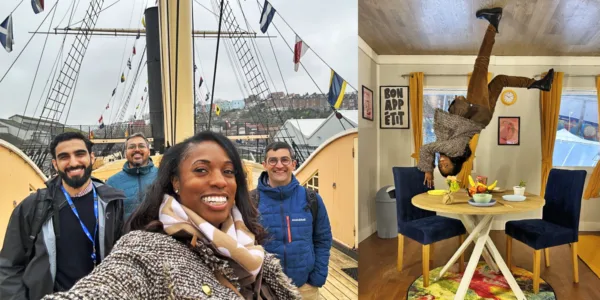
Bridging systems and perspectives: Our EAU-AUA exchange experience
The European Association of Urology (EAU)-American Urological Association (AUA) Exchange Programme provided an opportunity to experience different approaches to clinical care and research, while also creating space to share ideas, build relationships, and reflect on some of the challenges facing urology across healthcare systems.
The 2026 programme we participated in consisted of visits to the Bristol Urological Institute in England, KU Leuven in Belgium, and Guy’s and St. Thomas’ in London. Our highlights included observing technically complex cases (e.g. salvage prostatectomy and robotic neobladders), being exposed to different clinical workflows, and discussing the evolution of focal therapy.
Every member of the academic departments at the respective host sites went above and beyond to create the most welcoming, pleasant, and inclusive experience. Here is a recap of our participation at the programme.
Leuven: Different approaches, shared opportunities
Our first stop was at UZ Leuven under the guidance of Dr. Frank Van der Aa (BE). We were immersed in complex urological surgeries as observers, across the spectrum of reconstructive urology and oncology. Denise had the opportunity to attend a department showcase of everyone’s research and collaborations, including a brief discussion of her own research activities in artificial intelligence, erectile dysfunction, and Alzheimer’s disease and dementias.
The opportunity to see different clinical workflows and approaches to care was one of the recurring themes throughout the exchange. Although healthcare systems may differ considerably, many of the clinical and research challenges faced by urologists are remarkably similar.
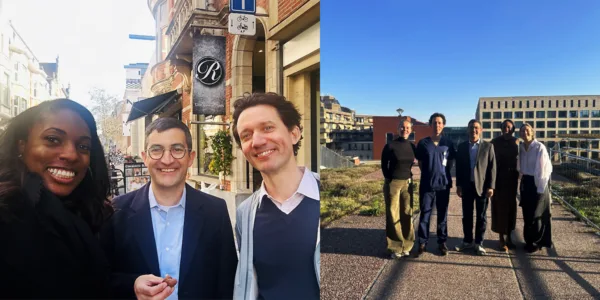
Bristol: Clinical care, research and community engagement
The next stop took us to the Bristol Urological Institute, under the care of Dr. Joe Philip (GB). The journey began with a departmental presentation about Denise’s background and research, followed by an extraordinary day observing prostate cancer surgeries. This department is also home to prominent urological research in all specialties.
Denise was surprised to learn about the role andrologists play in penile cancer management in the UK, which contrasts with the penile cancer management in the U.S. Southmead Hospital is a regional centre for penile cancer and she witnessed a penectomy for the first time in several years.
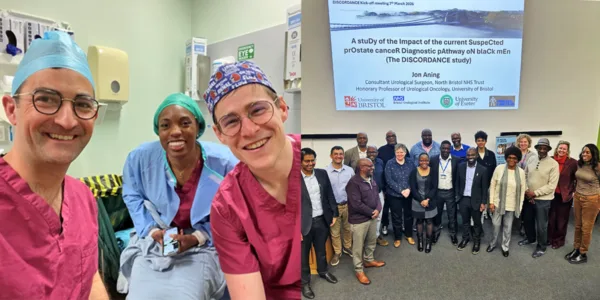
In Bristol, we had the opportunity to join a kick-off meeting for the DISCORDANCE trial led by Prof. Jonathan Aning (GB). This novel study will investigate disparities in prostate cancer outcomes for Afro-Caribbean men in England. This approach is closely linked to Alexander’s own community-engaged research in rural and minoritised communities in the United States. Considering challenges related to an increasingly globalised world, migration, and rising inequality, it is critical to involve our patients and their communities in our efforts to support equitable and high-quality care for all.
Denise also had the unique experience of actively engaging in a prostate cancer community forum led by Prof. Aning. She met several members of stakeholder organisations and patients discussing research and community engagement challenges related to prostate cancer care and underserved populations, e.g. Black men and LGBTQ community members. This forum highlighted similar challenges with prostate cancer access and care in the UK, despite the vastly different structures of the healthcare systems.
London: Innovation, multidisciplinary care and sustainability
The final stop of the tour was Guy’s Hospital and St. Thomas’ Hospital in London, hosted by the Prof. Prokar Dasgupta (GB).
Denise joined in cases led by the esteemed Dr. Tet Yap (GB) and the andrology team. The pioneering work being done by Dr. Yap’s team with penile rehabilitation and underserved populations, including efforts to broaden language and thinking beyond conventional vaginal penetrative intercourse, was particularly meaningful. Given her work running the penile rehabilitation programme at the University of Chicago, it was eye-opening for Denise to witness in real time the effective multidisciplinary practice for penile rehabilitation pathways in the department, and this greatly inspired changes to her current workflow.
A topic of particular interest to Alexander is the relationship between environmental sustainability and clinical care. Healthcare-derived pollution is associated with environmental harm and is responsible for hundreds of thousands of disability-adjusted life years lost annually. In urology, the warming planet is associated with a rising incidence of urologic diseases such as urolithiasis and kidney disease; climate-related disasters disrupt cancer care and screening potentially worsening urologic cancer outcomes. This is especially true in the developing world. Alexander was thrilled to see a heightened recognition of the importance of these issues in Europe, highlighting an important opportunity for coordinated international work.
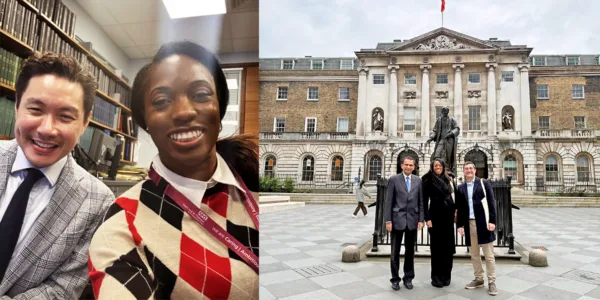
Beyond clinical: Getting to know cultures
The programme experience also extended beyond the clinical and academic environment, including visits to historic landmarks, medieval architecture, and a tour of a thousand years of medical history in London, among other experiences.
Alexander discovered several colleagues who were also avid runners and had the opportunity to explore European cities by foot with early morning runs in Belgium and England. These types of experiences build trust, enabling future collaboration and encouraging the open exchange of ideas, which is a key part of durable academic partnerships.
Denise was able to maintain her fitness by joining fellow andrologist Dr. Ayo Kalejaiye (GB) for CrossFit sessions. Urology fellows Dr. Khalid Alsugair (SA) and Dr. Paresh Sankhe (IN) were our gracious tour guides in Bristol. Dr. Zsuzsanna Zotter, who generously joined us on visits to Stonehenge and Bath, also shared interests with us in digital health and clinical informatics.
EAU Congress and looking ahead
These experiences culminated at the EAU Congress. We had the honour of meeting wonderful representatives of the EAU who helped make this exchange possible, alongside colleagues from the AUA who attended the meeting and supported the programme. We had a fantastic time attending conference lectures and bringing the overall experience to a close at the annual Friendship Dinner.
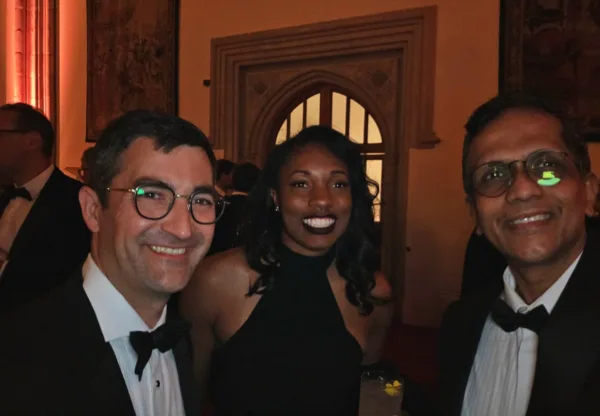
We are beyond grateful to have had this once-in-a-lifetime opportunity. Last but certainly not least, we could not speak highly enough of the EAU and AUA administrative staff who worked tirelessly behind the scenes to ensure that all aspects of this remarkable experience ran smoothly.
Collaborative endeavours such as the EAU-AUA Exchange Programme will help shape the next era of urology for the benefit of our clinical practice, our professional communities, and ultimately, our patients.
The exchange reinforced the value of bringing people, ideas, and healthcare systems together. By sharing different approaches to clinical care, research, community engagement, and sustainability, the EAU-AUA Exchange Programme created opportunities not only to learn from one another, but also to build relationships that can support future collaboration.
The next edition of the EAU-AUA Exchange Programme